
Himalayan Horse Lick Salt: How to Choose the Right Salt Lick for Your Horse
TL;DR
- Horses need salt daily. A lick is one easy way to offer it.
- The right lick depends on diet, workload, climate, and water access.
- Himalayan salt is mostly sodium chloride. Its trace minerals don’t replace a balanced diet.
- Heavy sweaters may need electrolytes. Ask your vet.
- Look for steady weight, hard salt, a secure rope, and strong packaging.
Choosing himalayan horse lick salt starts with your horse, not the product. Diet, workload, climate, and water access all matter. This guide is for horse owners and barn managers who want a clear answer without hype. You’ll learn how to compare licks, when a lick isn’t enough, and what to check before you buy.
What Is the Right Salt Lick for a Horse?
The right salt lick for horses depends on your horse’s diet, workload, climate, water access, and individual salt intake. For many healthy horses, plain salt supplies enough sodium and chloride. Horses in heavy work or losing a lot of sweat may need a more specific electrolyte plan from a veterinarian or equine nutritionist.
The Merck Veterinary Manual notes that salt supports water balance, muscle contraction, and acid-base balance, and that it needs to rise with sweat loss. It also says to offer salt free-choice, though consumption varies.
What Are the Health Benefits of Himalayan Salt Licks for Horses?
The main benefit is simple. A lick gives your horse steady access to sodium and chloride, and horses need both every day. Himalayan salt licks for animals are also hard and dense, so they hold up in stalls and paddocks. They carry traces of iron, magnesium, and potassium too. But those amounts are tiny, so don’t count on them to fix a mineral gap.
How Do Himalayan Salt Licks Support Equine Hydration?
They keep sodium available, and sodium drives thirst. When sodium runs low, a horse may drink less, and problems like colic can follow. Still, a lick won’t hydrate your horse alone. Fresh water must always be within reach.
Is a Salt Lick Enough for Every Horse?
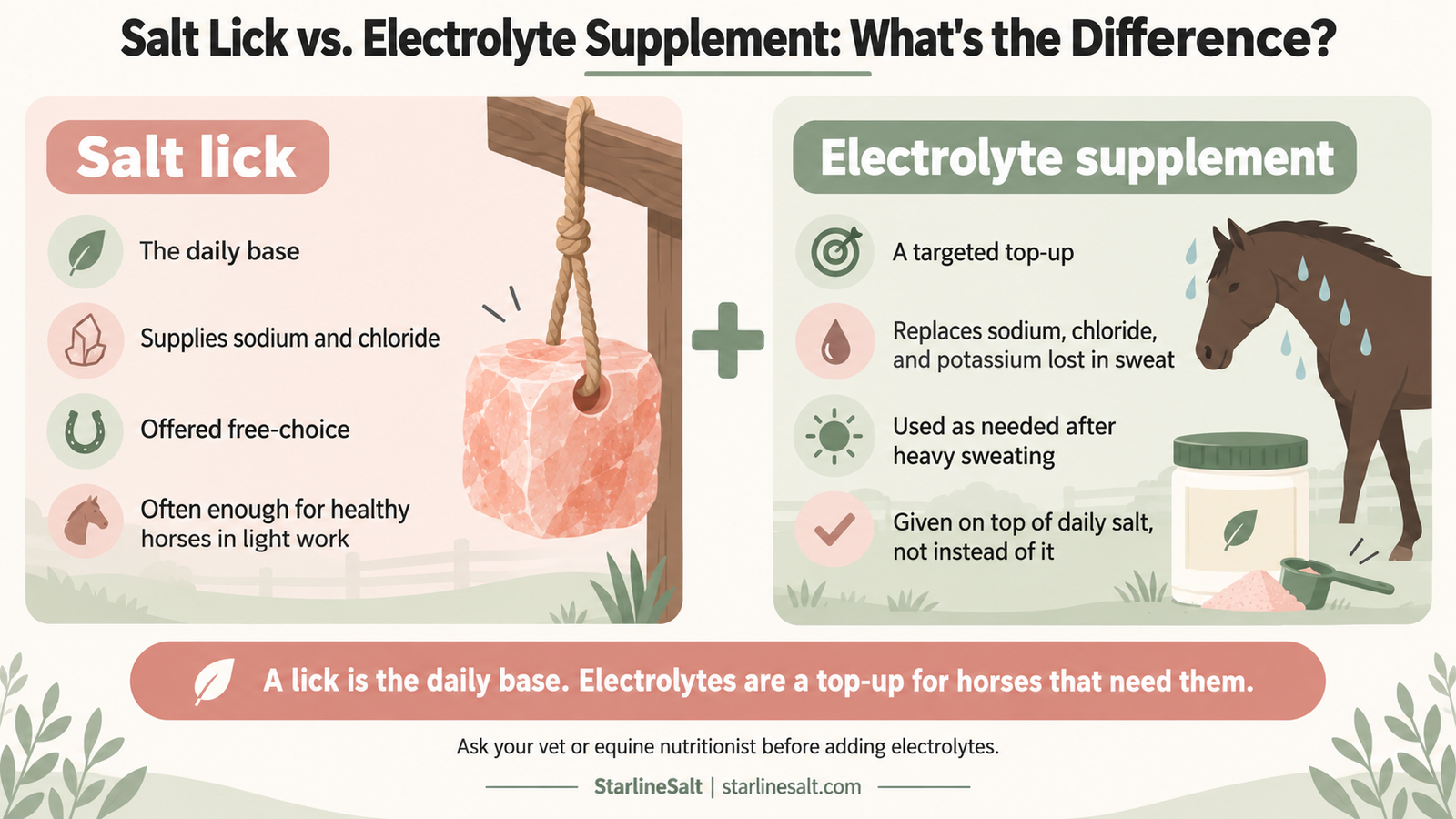
No. A salt lick supplies sodium and chloride. Horses in heavy work, endurance training, high heat, or heavy sweating may need extra electrolyte replacement.
Horses sweat at higher rates than any other mammal and can lose large amounts of sodium, chloride, and potassium. A plain lick isn’t built to replace all of that. Nor do electrolyte supplements replace salt. They’re meant for as-needed use after heavy sweating, on top of daily salt.
Think of it this way: a lick is the daily base. An electrolyte is a top-up for horses that need one.
What Should You Consider Before Choosing a Salt Lick?
Check these eight factors first.
| Factor | What to consider |
| Horse workload | Light work vs heavy sweating |
| Climate | Hot/humid weather can increase sweat losses |
| Diet | Existing sodium/mineral intake matters |
| Water access | Fresh water should always be available |
| Lick format | Block, hanging lick, or loose salt |
| Consumption | Some horses lick blocks readily; others consume very little |
| Mineral needs | Don’t assume trace minerals replace a balanced diet |
| Veterinary advice | Important for medical, metabolic, or performance horses |
Plain Salt vs. Mineral Salt Licks: What’s the Difference?
Plain salt is sodium chloride. A mineral salt for livestock has other minerals added, or comes from a natural source that carries traces. Himalayan salt fits the second group. It’s mostly sodium chloride, with small amounts of other minerals.
Plain white salt works well for many horses. A natural lick salt for animals, like Himalayan rock salt, suits owners who want a hard lick that hangs easily. Either way, the best mineral lick for horses fits the diet and actually gets used.
What Is the Best Mineral Mixture for Equine Health?
Usually a simple one: good forage, daily salt, and extra minerals only if tests show a gap. More isn’t better. Iron, copper, selenium, and phosphorus are among the nutrients most often fed in excess.
Block, Hanging Lick, or Loose Salt: Which Is Better?
None wins for every horse. Pick the one your horse actually uses.
- Hanging lick: Keeps salt off wet ground. It needs a safe height and a secure rope.
- Block in a holder: Fits a standard holder or feed bucket.
- Loose salt: Easy to measure. Many horses take it more readily than a hard block.
If your horse barely touches a lick, try loose salt in the feed.
How Much Salt Does a Horse Need?
A 1,100-lb horse at rest needs about 1 ounce (30 g) of salt a day, roughly 2 tablespoons. Some vet sources say closer to 50 g (about 1.75 oz). Hay and most grains hold little sodium, so a lick or loose salt fills the gap. Horses will seek out salt, but intake varies widely. Watch how fast the lick wears down. If it barely changes, your horse may not be getting enough.
How Does Workload and Sweating Affect Salt Needs?
More sweat means more salt lost. Maintenance needs can double or triple as work and heat go up. A trail horse in summer needs a different plan than a pasture pet, so adjust with the seasons and ask your vet when work gets heavy. Mad Barn
What Should You Look for in a Quality Horse Salt Lick?
When you shop for rock salt for horses, look past the color.These are the details we check.
What We Look for When Preparing Himalayan Salt Licks for Horses
- Block weight: Matches the weight agreed for the order.
- Size and shape: Suits a stall, holder, or bucket. No sharp edges.
- Hardness: Dense salt that resists crumbling.
- Rope or hanging format: Secure rope, hung at a safe height.
- Natural color variation: Pale pink to deep orange is normal. Color alone doesn’t show quality.
- Surface finish: Easy to handle, with no loose chips.
- Breakage resistance: No cracks or weak spots.
- Packaging and export packing: Protected for long-distance shipping.
- Consistency between production runs: Each batch matches the last.
From Our Product Team: Natural Himalayan salt varies in shade, surface texture, and shape. For horse licks, focus less on matching color and more on consistent weight, safe handling, secure rope placement, and packaging that survives transport.
How StarlineSalt Prepares Himalayan Salt Licks for Horses
Here’s our process, from raw salt to shipment.
- Raw salt selection: We choose suitable salt blocks.
- Cutting and shaping: We cut each piece to the required weight and size.
- Drilling or rope fitting: For hanging formats, we drill and fit the rope.
- Inspection: We check dimensions, weight, cracks, and finish.
- Packaging: We pack each lick to prevent breakage in export.
- Batch preparation: We keep each batch to the agreed order specifications.
When Should You Speak With a Veterinarian?
Call your vet before choosing a lick if your horse has a medical or metabolic condition, eats a restricted diet, or is in hard training. Call, too, if your horse suddenly drinks much more or less than usual. An equine nutritionist can also review your hay test.
Quick Horse Salt Lick Checklist
Refer to this quick checklist to understand the key points to consider when choosing the right horse salt lick for your needs.Horse Salt Lick Checklist
Frequently Asked Questions
- Is Himalayan salt good for horses?
Yes, for most healthy horses. It’s mostly sodium chloride, which horses need daily. Its trace minerals are minor, so keep feeding a balanced diet. Horses with health conditions should follow their vet’s advice.
- Do horses need a salt lick every day?
Horses need salt every day, but a lick is only one way to supply it. You can offer a lick free-choice or add loose salt to feed. Keep fresh water nearby.
- Can a horse eat too much salt from a lick?
It’s uncommon when fresh water is always available, but it can happen. If a lick disappears fast or your horse drinks far more than usual, ask your vet.
- How long does a Himalayan salt lick last?
There’s no fixed answer. It depends on lick size, how many horses share it, and the weather. Note the hang date and check wear weekly to learn your horse’s pace.
- Where should I hang a horse salt lick?
Hang it at a safe height, within easy reach, in a stall or under cover. Fasten the rope securely, and keep it clear of anything a hoof or halter could catch.
- What are the signs a horse needs more salt?
Horses low on salt may tire easily, stop sweating, or get muscle spasms during hard work. These signs aren’t specific, so call your vet rather than guessing.
Final Thoughts: Match the Lick to the Horse
The right lick starts with your horse’s needs, not the color of the salt. Match it to diet, workload, and climate. Keep water fresh. Treat a lick as the daily base, and add electrolytes only when your vet says so.
Ready to compare options? See our pick of the best salt lick for horses, or contact our team with questions about sizes, rope formats, and export packing.