
Himalayan Salt Bricks for Walls: Sizes, Installation and Bulk Buying Guide
TL;DR
- A salt wall adds look and ambiance. It is not a medical treatment.
- Rock salt is heavy, roughly 11 lb per square foot for every inch of thickness. Check the wall first.
- Use salt-compatible install methods, not regular adhesive.
- Order spare bricks from one lot, and approve a sample first.
- Keep salt walls dry. Avoid bathrooms and damp rooms.
- Wall bricks are not cooking blocks unless they are graded as food-grade.
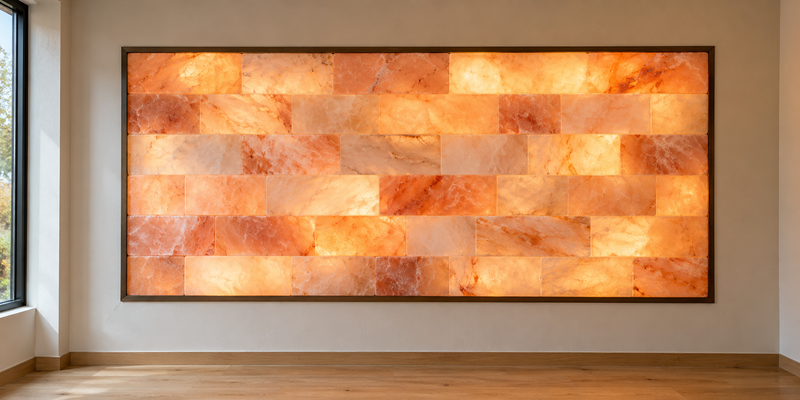
Himalayan salt bricks for walls are solid pieces of pink rock salt, cut into brick shapes and stacked to build a glowing feature wall. They give a room a warm, natural look, especially when lit from behind. Most are bought for decor, spa rooms and feature walls, not for cooking.
This guide is for home owners, spa owners, interior designers, contractors and bulk buyers. You will learn how to choose bricks, plan the structure, install them safely and order in volume.
What Are Himalayan Salt Bricks for Walls?
They are salt bricks cut from natural pink rock salt and finished for wall use. Builders stack them, frame them or fix them to a backer board. The result is a textured wall with a soft pink to deep rose color.
Where the Bricks Come From
Genuine Himalayan salt comes from the Khewra Salt Mine in Punjab, Pakistan. Large rock salt pieces are cut at the mine and shaped into bricks in a factory. StarlineSalt sources its salt directly from Khewra and has supplied Himalayan salt products since 2001.
Bricks vs Blocks vs Tiles
Suppliers use these names loosely, so always check the dimensions. In general:
- Salt bricks are small, brick-shaped pieces. They give the classic stacked look and are the most common choice for salt brick wall construction.
- Salt wall blocks are larger or thicker rock salt blocks. They need fewer joints and build faster, so they suit bigger salt block wall panels and partitions.
- Salt tiles are thin slabs. They work as a veneer on a backer board and are lighter on the wall.
What a Salt Wall Does and Doesn’t Do
A salt wall gives you warm color, natural texture and a calm look. That is its main value. Backlit, it glows in soft amber and rose tones.
It does not treat any condition. Some people find salt rooms relaxing, but a wall of bricks is decoration, not therapy. Avoid health promises when you describe it to clients.
Natural salt also varies. Each piece differs in shade and pattern, and that variation is part of the appeal.
Where to Use Himalayan Salt Brick Walls
Salt walls work in homes, spas and hospitality spaces. Two uses come up most often.
Salt Walls for a Salt Therapy Room
A salt wall is a popular part of salt room construction. It sets the mood and makes the space feel calm. But the wall is only one part of the setup.
Active halotherapy uses a device called a halogenerator, which turns dry salt into fine particles in the air. Decorative bricks do not do that. A full salt therapy room also needs planned ventilation, humidity control, flooring, lighting and seating.
Think of halotherapy room walls as design. Studios use full brick walls or salt therapy room panels for the look, and plan the equipment separately. Evidence for the health benefits of salt therapy is limited, so keep any client-facing claims modest.
Pink Himalayan Salt Wall Decor Ideas
A salt accent wall suits many spaces:
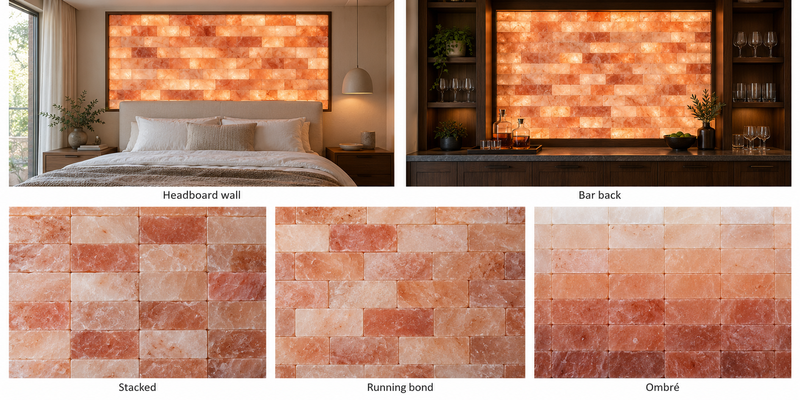
- Headboard walls in bedrooms, with warm, dimmable lighting.
- Bar backs with backlit shelves.
- Reception fronts for spas, salons and clinics.
- Partitions that divide a room without blocking light.
- A fireplace surrounds decorative or electric units. Keep bricks away from direct flame and high heat.
- Hotels and restaurants feature walls that set a brand look.
Three layouts are common:
- Stacked: straight rows and columns for a clean, modern look.
- Running bond: each row offset by half a brick, like traditional brickwork.
- Ombre: bricks sorted from light to deep pink. Order enough from one lot so the gradient stays smooth.
Pairings matter too. Warm wood adds contrast. Dark slate or honed stone makes the pink stand out. Black metal frames give a sharper, modern edge.
How to Choose the Right Himalayan Salt Bricks
Three things decide how a salt wall looks and lasts: color, finish and consistency.
Color Grades and the Pink Himalayan Salt Wall Look
Color is the biggest design choice. Himalayan salt ranges from pale pink through medium pink to deep rose and orange-red. Lighter bricks usually glow softer and brighter when backlit. Darker bricks look richer and more dramatic, but they let less light through.
Test before you commit. Put samples of each grade in front of the same LED and compare them. Color shifts a lot between daylight and warm-white light.
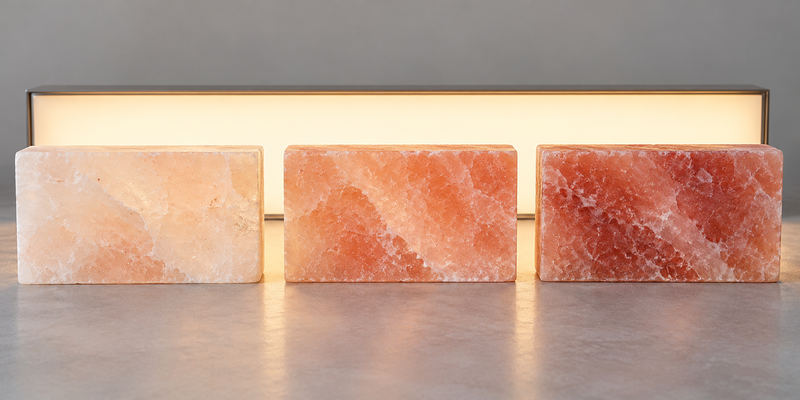
For an even pink Himalayan salt wall look, pick one grade for the whole wall. For a gradient, plan it on purpose.
Surface Finish and Consistency
Common finishes include natural split, smooth cut and polished. A rougher face catches light with more texture. A smoother face looks cleaner and more modern.
Consistency matters more than finish. Uneven thickness leaves gaps and makes the wall look wavy. Check for clean edges and unchipped corners. Expect natural variation in color, but not in size.
Quality Checks Before You Order
- Samples. Request samples and check them against your written spec.
- One lot. Order all the bricks for a wall from the same lot so color and size match.
- Tolerances. Agree acceptable ranges in writing for thickness, length and color.
- Packing. Ask how bricks are packed for export. Salt is brittle, so look for corner protection and wrapped pallets.
- Arrival check. Count cartons and inspect for breakage as soon as the shipment lands.
How to Plan and Install a Himalayan Salt Brick Wall
Good planning prevents most problems. Start with quantity, then structure, then the install method.
Estimate How Many Bricks You Need
Divide the wall area by the area of one brick face, then add extra for cuts and breakage.
Worked example (using an example 8 × 4 inch brick face, so swap in your real size):
- Wall size: 10 ft wide × 8 ft high = 80 sq ft.
- One brick face: 8 × 4 in = 32 sq in, or about 0.22 sq ft.
- Bricks needed: 80 ÷ 0.22 = about 360.
- Add 5 to 10% extra: 378 to 396 bricks. Order about 400.
If you leave joints between bricks, add the joint width to each brick dimension before you calculate.
Plan Structure, Weight and Backing
Salt is heavy and brittle. At about 11 lb per square foot for each inch of thickness, the example wall above weighs roughly 880 lb at 1 inch thick and 1,760 lb at 2 inches.
Drywall alone is not enough for a thick salt wall. Fix a rigid support frame or backer board to studs or masonry. For large or thick walls, ask a contractor or structural engineer to confirm that the wall and floor can carry the load.
Install Methods Compared
| Factor | Frame ( Glue-Free ) | Salt Adhesive on backer board |
| How it works | Bricks sit in a metal or wood frame, or are held by clips | Bricks bond to a rigid backer board with a salt-compatible adhesive |
| Look | Visible frame lines or small gaps | Cleaner, more continuous surface |
| Replacing bricks | Easy: lift out and swap | Harder, since bricks are bonded |
| Moisture risk | Lower, with no adhesive to react | Depends on the adhesive and backer board |
| Skill needed | Moderate | Higher |
| Best for | Spa rooms, partitions and walls you may rework | Fixed feature walls with a seamless look |
LED Backlighting and Electrical Access
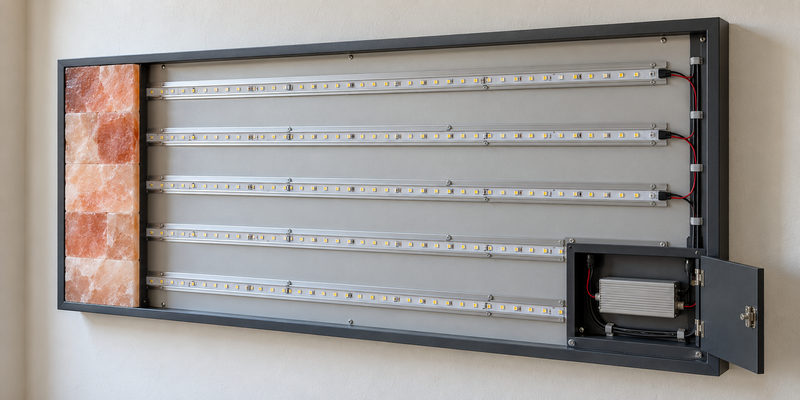
Backlighting turns salt bricks into a glowing feature. A backlit salt wall looks best with warm-white LEDs, around 2700K to 3000K. Cool white makes the pink look flat and gray.
LEDs give off little heat, but drivers and strips still warm up. Leave some airflow, and keep wiring away from damp. Add a dimmer for mood control.
Plan an access panel from the start. It lets you replace a failed LED without taking bricks down. Use a licensed electrician for all wiring.
Humidity and Maintenance
Salt attracts moisture. It begins to absorb water from the air at about 75% relative humidity, so a damp room can leave bricks wet, dull or stained. Aim for a dry, stable room.
Clean with a dry cloth. Avoid water and sprays. Skip bathrooms and other damp rooms. In humid climates, a dehumidifier helps.
Step-by-Step Overview
- Measure the wall and choose the brick size and color grade.
- Check the wall and floor load, then build the frame or fix the backer board.
- Run the LED strips and power, and plan the access panel.
- Dry-lay a few rows to check the color mix and pattern.
- Install bricks from the bottom up, checking level every few rows.
- Cut edge pieces to fit.
- Fit the access panel, test the lights and wipe the wall with a dry cloth.
Common Salt Wall Installation Mistakes
Most failed salt walls trace back to the same six errors.
- Using regular adhesive. Standard tile adhesive and cement mortar are not made for salt. They can stain the bricks or bond poorly. Use a salt-compatible method.
- Ignoring wall weight. Salt is dense. Check the wall and floor before you build.
- Ordering too few spares. You will cut and break some bricks. Order 5 to 10% extra.
- Mixing batches. Bricks from different lots can differ in color and size. Order everything from one lot.
- Building in a damp room. Moisture dulls and stains salt. Keep the room dry.
- Skipping LED access. Without an access panel, replacing one LED means taking the wall apart.
Cost and Bulk Buying: Himalayan Salt Tiles for Walls Wholesale
Buying Himalayan salt tiles for walls wholesale lowers the cost per piece and keeps color more consistent across a large project. Here is what drives the price, and what to ask before you commit.
What Affects the Cost?
- Wall area. More square feet means more bricks.
- Brick size and thickness. Thicker pieces use more salt and cost more to ship.
- Framing and backing. Frames, backer board and adhesive add material cost.
- Lighting. LED strips, drivers, dimmers and an electrician all count.
- Labour. Dry stacking is quicker than bonding and finishing.
- Shipping. Salt is heavy, so freight can be a large share of the total.
- Wastage. Plan 5 to 10% extra for cuts and breakage.
What to Ask a Supplier Before a Bulk Order
A good salt tile supplier answers these clearly:
- MOQ. What is the minimum order, and does it change for custom sizes?
- Export packing. How are bricks protected? Look for corner protection and wrapped pallets.
- Container loading. How many square feet fit in a container? Salt is dense, so a container often reaches its weight limit before it is full.
- Samples. Can you test each grade before ordering?
- Custom sizes. Which sizes and thicknesses are available, and at what tolerance?
- Lead time. How long from sample approval to shipment?
StarlineSalt offers custom manufacturing and ships bulk Himalayan salt tiles and bricks from Pakistan to buyers in more than 36 countries, including the United States. Browse the Himalayan salt bricks wholesale range for current options.
Project Planning Checklist
- Measurements: final wall size, openings and outlets.
- Use: decor wall, spa room or commercial feature.
- Structure: wall and floor load, and the frame or backer board plan.
- Moisture: room humidity, ventilation and no water exposure.
- Lighting: LED type, color temperature, power and dimmer.
- Maintenance access: an access panel for LEDs and a way to swap bricks.
- Delivery: dry storage on site and help unloading heavy pallets.
Frequently Asked Questions
1. How many salt bricks do I need per square foot?
It depends on the brick face size. Divide 144 by the face area in square inches. An 8 × 4 inch face (32 sq in) needs about 4.5 bricks per square foot. Add 5 to 10% extra for cuts and breakage.
2. How heavy is a Himalayan salt wall?
Rock salt weighs about 11 lb per square foot for each inch of thickness. A 2-inch wall is around 22 lb per square foot, so a 10 × 8 ft wall weighs roughly 1,760 lb.
3. Can salt bricks go on any wall?
No. The wall must carry the weight and stay dry. Use studs or masonry with a rigid frame or backer board, and avoid damp walls. Ask a contractor to check large walls.
4. Does a salt wall need backlighting?
No, but it helps. Salt is translucent, so warm-white LEDs make the color glow. Without light, the wall still looks natural but flatter.
5. How do I protect a salt wall from moisture?
Keep the room dry, ideally well below 75% relative humidity, since salt absorbs water above that level. Avoid water and sprays, clean with a dry cloth, and use a dehumidifier if needed.
6. Can I use a salt wall in a bathroom?
It is not recommended. Steam and splashes make salt wet, dull and stained. Choose a dry room instead.
7. Are salt bricks alone enough for salt therapy?
No. Active halotherapy needs equipment such as a halogenerator and a controlled room. Bricks add the look, not the therapy.
Conclusion
A good salt wall comes down to three decisions.
- Choose: pick the color grade, finish and size that fit your design, and test samples under your own lighting.
- Install: check the wall and floor load, use a salt-compatible method, plan LED access and keep the room dry.
- Source: order everything from one lot, with spares, from a supplier who can show specs, packing and samples.
Ready to plan your wall? Browse the Himalayan Salt Bricks category, or contact the StarlineSalt team with your wall size, brick type and delivery location. Ask for samples and the spec sheet first, then decide.